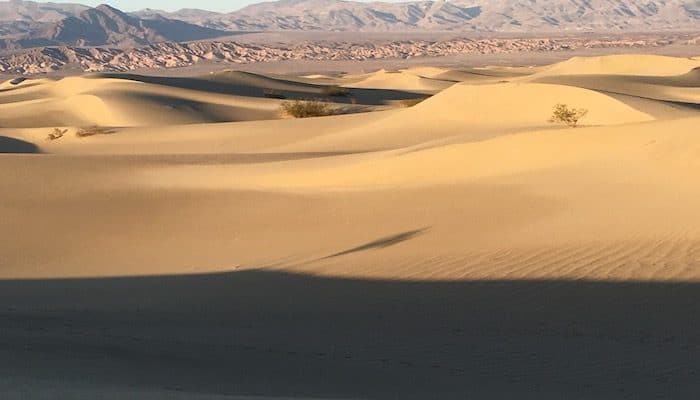
Death Valley National Park is America’s second largest national park. Desolate and beautiful, there are rocky mountains with peaks to 11,000 feet, as well as the lowest point in North America. There are canyons, badlands, gorgeous dunes, craters, and salt flats. Many of the runs and trails are especially beautiful in early morning or late afternoon, catching spectacular light. PRO TIP: Death Valley can have spectacular wildflower displays in spring. This wildflower hotline is updated each season.
This park can be forbidding — hikes can be steep and narrow, and due to the open, desert-like terrain, many of the trails are not marked and one can get turned around. Cellphone coverage and GPS do not work well in the park. Finally, there is the weather. This is one of the hottest, driest places on earth, in summer. Temps in the valley areas often reach 120F (45C) or greater. Even at night it can be 100F. From November to May, the weather is more run-friendly, although nights and mornings can be cool. At altitude in winter, there can be snow and challenging terrain.
Given the extreme conditions and terrain, Death Valley is naturally home to several marathons and road races, including the Death Valley Marathon, run in February.
For the casual runner visiting the park, we have a few recommended spots. There are also some great opportunities for trail running. Most of the main places for running in Death Valley National Park are along the park roads. These roads can get busy with traffic, especially in season (November-May). You should be OK if you run against traffic, and during daylight hours. Note that very few roads have shoulders and where there is a shoulder the surface is gravel and can be soft and challenging for running.
Badwater Road
This is the most popular of the main roads in Death Valley National Park for running. It is less trafficked than Rt. 190, the main park road. It’s also fairly flat. There are great views of the Black and Paramint Mountains and the canyons/badlands to the east. A good section for running, close to many of the main sites, is the 11-mile stretch between Furnace Creek and Badwater Basin. Note that the road is not wide and the shoulder is sloped, so for the most part you need to stay in the road. Cars drive fast and there can be a lot of cars in season. Please use caution.
Furnace Creek Area
For those staying near Furnace Creek, either at the Inn, Ranch, or from the Visitor Center, there are a few places to run off the main park road. There are roads around the Sunset and Texas Spring campgrounds, which can give you a couple of miles of running. Also, behind the Visitor Center, is quiet, shaded Airport road, which runs out 0.75 miles to the airfield and a wildlife viewing platform. There is a sidewalk from the Visitor Center to Mustard Canyon (1.4 miles, 1k).
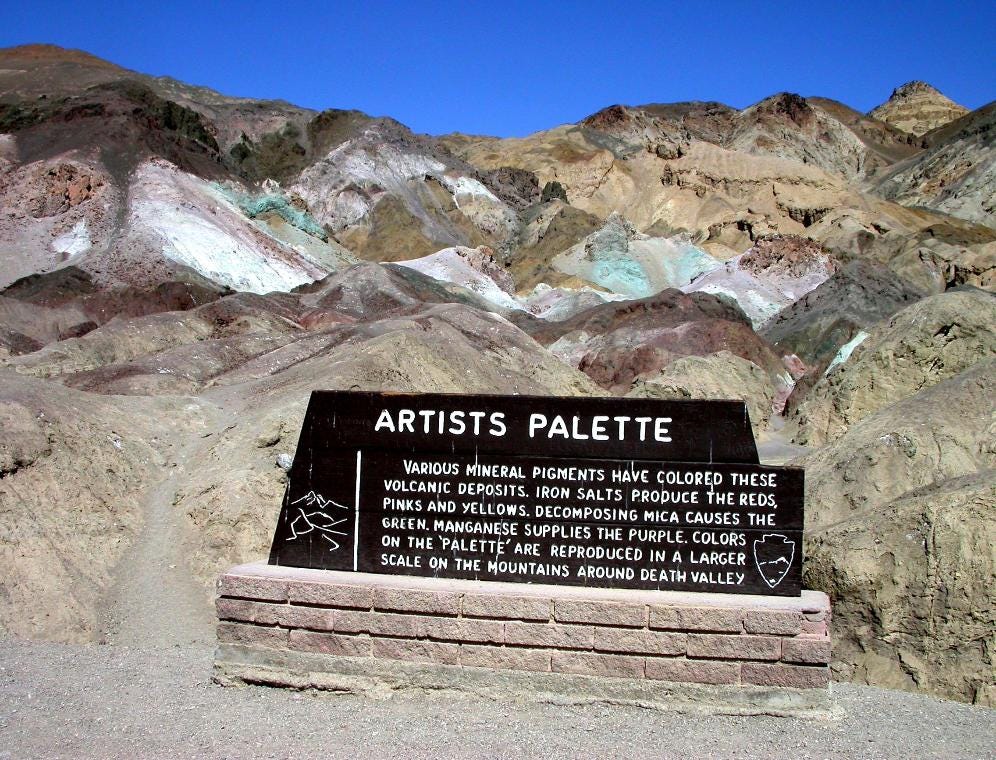
This is a challenging 9-mile loop road, popular with runners and cyclists, as it is paved and off the main road. Traffic flows one-way. To do a full loop requires an additional 3 miles on Badwater Rd. Given the length and challenge, we recommend doing a section of Artists Drive, near the Palette. Especially nice in the late afternoon light, with views to multi-hued volcanic and sedimentary hills. The road gets quite close to the hills at Artists Palette, where there are also restrooms. Note: Artists Drive is quite narrow with no shoulder. This is a hilly, challenging run with 1,700 foot elevation gain if you do all 12 miles.
Twenty Mule Team Canyon
Not far from Furnace Creek and Zabriski Point, this is another good opportunity to run off the main road. It’s a 2.7 mile one-way loop along an unpaved road, winding through spectacular badlands.
Golden Canyon/Gower Gulch Loop Trail
START: Zabriskie Point. ROUTE MAP of 10k combining the two – 962 foot gain
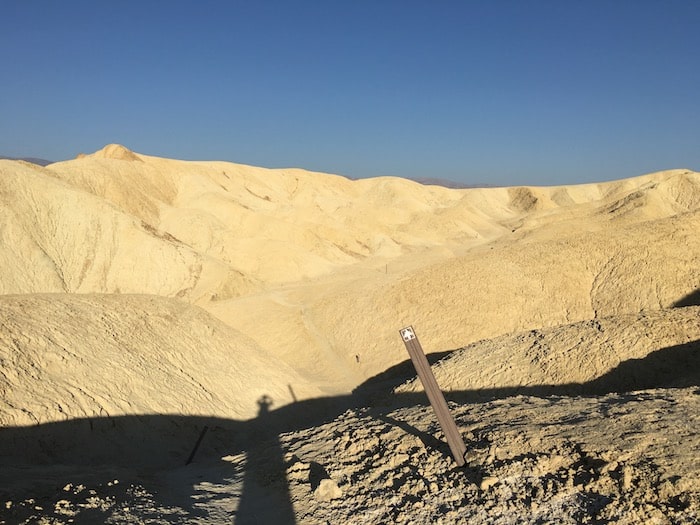
This is a trail run but fairly run-able for the novice to intermediate trail runner. I am also high on this run because it is one of the few marked trails in Death Valley NP. From the parking lot, one great option is the 1.5 miles one way to Red Cathedral. This is quite run-able, sort of like a rough dirt road. Hit it early in the morning or in the late afternoon/evening for the best light.
A more ambitious option is the 10k Golden Canyon Gower Gulch Loop. The gulch section is an empty riverbed, through badlands and canyon narrows. There are a couple of rocky/steep sections where you should walk/hike, but most of this trail is run-able This is one of the more spectacular trail runs you’ll ever do. Start at Zabriskie Point. The footing is fairly decent for most of the route. There’s lots of elevation: 962 feet over 6.1 miles – first part down, second part up. Thanks to Aurélie Vilmer, who suggested this route.ROUTE MAP
Badwater Flats
This is off Badwater Rd., near Badwater, some 17 miles south of Furnace Creek
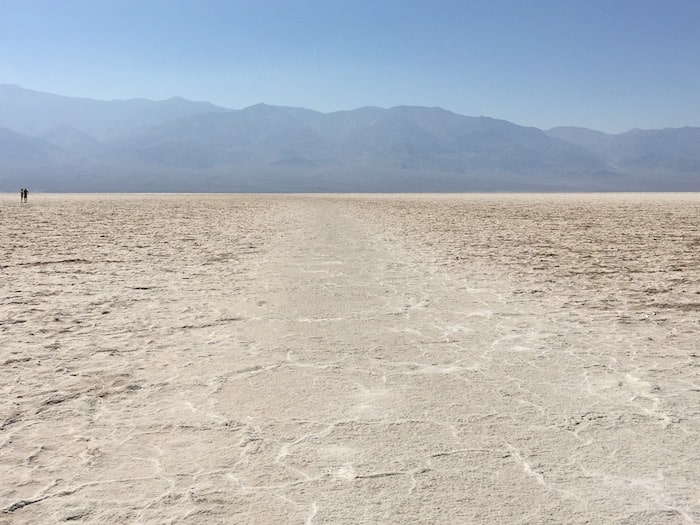
One of the unique places to run in the world. Want to run at 243 feet below sea level, the lowest point in the Western Hemisphere? You can do it at Badwater Flats. Just off Badwater Rd., 17 miles south of Furnace Creek, is a parking lot and interpretive signs describing this unique phenomenon. It is possible to walk/run on the flats. The trail is flat (!) and wide, with no vehicles. The first ½ mile or so is a very smooth, hard pack surface, perfect for running. After ½ mile, the surface becomes rougher and bumpier, and it can be challenging for running (you don’t want to fall here — literally, it would be salt rubbing in your wounds). At this point, walking is easier than running. One can walk/run for 5 miles across the flats. And while this might be the lowest point in the Western Hemisphere, you can also run at the lowest point on Earth, on a bike path along the Dead Sea in Israel.
Note: Do not do this in really hot weather — as this is about the hottest spot in Death Valley. Also, be careful if it is raining, the area could be filled with water. Also, the surface condition can change depending on recent weather.
Ash Meadows Wildlife Refuge
Located 30 minutes from the park, but across from the Longstreet Inn and Casino (a popular motel with visitors to the NP). The largest remaining oasis in the Mojave Desert with at least 26 plant and animal species found nowhere else on the planet. There are several boardwalks and paths which make for great running. Highlights are Crystal Spring Boardwalk, leading to a brilliant blue spring flowing at 2,800 gallons per minute; the stone cabin of Jack Longstreet, and Point of Rocks, and Kings Spring, home to a rare species of pupfish.
Ghost Town Run
6.3 miles (10k) out and back. 418 foot gain. Start: Off Rt. 374. ROUTE MAP
Aurélie Vilmer
Just east of Death Valley NP, but actually in Nevada, here’s an opportunity to run to a bona fide ghost town — actually used in movie sets! Near Beatty, NV just off Rt. 374, a gravel road leads for 2.5 miles to Rhyolite. Continue for another 0.5 miles to the Goldwell Open Air Museum, passing Tom Kelly’s Bottle House. It’s not too hilly and the footing is good. Note – very exposed, use caution in heat. Thanks to Aurélie Vilmer, who suggested this route.
Death Valley National Park is America’s second largest national park. Desolate and beautiful, there are rocky mountains with peaks to 11,000 feet, as well as the lowest point in North America. There are canyons, badlands, gorgeous dunes, craters, and salt flats. Many of the runs and trails are especially beautiful in early morning or late afternoon, catching spectacular light. PRO TIP: Death Valley can have spectacular wildflower displays in spring. This wildflower hotline is updated each season.
This park can be forbidding — hikes can be steep and narrow, and due to the open, desert-like terrain, many of the trails are not marked and one can get turned around. Cellphone coverage and GPS do not work well in the park. Finally, there is the weather. This is one of the hottest, driest places on earth, in summer. Temps in the valley areas often reach 120F (45C) or greater. Even at night it can be 100F. From November to May, the weather is more run-friendly, although nights and mornings can be cool. At altitude in winter, there can be snow and challenging terrain.
Given the extreme conditions and terrain, Death Valley is naturally home to several marathons and road races, including the Death Valley Marathon, run in February.
For the casual runner visiting the park, we have a few recommended spots. There are also some great opportunities for trail running. Most of the main places for running in Death Valley National Park are along the park roads. These roads can get busy with traffic, especially in season (November-May). You should be OK if you run against traffic, and during daylight hours. Note that very few roads have shoulders and where there is a shoulder the surface is gravel and can be soft and challenging for running.
Badwater Road
This is the most popular of the main roads in Death Valley National Park for running. It is less trafficked than Rt. 190, the main park road. It’s also fairly flat. There are great views of the Black and Paramint Mountains and the canyons/badlands to the east. A good section for running, close to many of the main sites, is the 11-mile stretch between Furnace Creek and Badwater Basin. Note that the road is not wide and the shoulder is sloped, so for the most part you need to stay in the road. Cars drive fast and there can be a lot of cars in season. Please use caution.
Furnace Creek Area
For those staying near Furnace Creek, either at the Inn, Ranch, or from the Visitor Center, there are a few places to run off the main park road. There are roads around the Sunset and Texas Spring campgrounds, which can give you a couple of miles of running. Also, behind the Visitor Center, is quiet, shaded Airport road, which runs out 0.75 miles to the airfield and a wildlife viewing platform. There is a sidewalk from the Visitor Center to Mustard Canyon (1.4 miles, 1k).
This is a challenging 9-mile loop road, popular with runners and cyclists, as it is paved and off the main road. Traffic flows one-way. To do a full loop requires an additional 3 miles on Badwater Rd. Given the length and challenge, we recommend doing a section of Artists Drive, near the Palette. Especially nice in the late afternoon light, with views to multi-hued volcanic and sedimentary hills. The road gets quite close to the hills at Artists Palette, where there are also restrooms. Note: Artists Drive is quite narrow with no shoulder. This is a hilly, challenging run with 1,700 foot elevation gain if you do all 12 miles.
Twenty Mule Team Canyon
Not far from Furnace Creek and Zabriski Point, this is another good opportunity to run off the main road. It’s a 2.7 mile one-way loop along an unpaved road, winding through spectacular badlands.
Golden Canyon/Gower Gulch Loop Trail
START: Zabriskie Point. ROUTE MAP of 10k combining the two – 962 foot gain
This is a trail run but fairly run-able for the novice to intermediate trail runner. I am also high on this run because it is one of the few marked trails in Death Valley NP. From the parking lot, one great option is the 1.5 miles one way to Red Cathedral. This is quite run-able, sort of like a rough dirt road. Hit it early in the morning or in the late afternoon/evening for the best light.
A more ambitious option is the 10k Golden Canyon Gower Gulch Loop. The gulch section is an empty riverbed, through badlands and canyon narrows. There are a couple of rocky/steep sections where you should walk/hike, but most of this trail is run-able This is one of the more spectacular trail runs you’ll ever do. Start at Zabriskie Point. The footing is fairly decent for most of the route. There’s lots of elevation: 962 feet over 6.1 miles – first part down, second part up. Thanks to Aurélie Vilmer, who suggested this route.ROUTE MAP
Badwater Flats
This is off Badwater Rd., near Badwater, some 17 miles south of Furnace Creek
One of the unique places to run in the world. Want to run at 243 feet below sea level, the lowest point in the Western Hemisphere? You can do it at Badwater Flats. Just off Badwater Rd., 17 miles south of Furnace Creek, is a parking lot and interpretive signs describing this unique phenomenon. It is possible to walk/run on the flats. The trail is flat (!) and wide, with no vehicles. The first ½ mile or so is a very smooth, hard pack surface, perfect for running. After ½ mile, the surface becomes rougher and bumpier, and it can be challenging for running (you don’t want to fall here — literally, it would be salt rubbing in your wounds). At this point, walking is easier than running. One can walk/run for 5 miles across the flats. And while this might be the lowest point in the Western Hemisphere, you can also run at the lowest point on Earth, on a bike path along the Dead Sea in Israel.
Note: Do not do this in really hot weather — as this is about the hottest spot in Death Valley. Also, be careful if it is raining, the area could be filled with water. Also, the surface condition can change depending on recent weather.
Ash Meadows Wildlife Refuge
Located 30 minutes from the park, but across from the Longstreet Inn and Casino (a popular motel with visitors to the NP). The largest remaining oasis in the Mojave Desert with at least 26 plant and animal species found nowhere else on the planet. There are several boardwalks and paths which make for great running. Highlights are Crystal Spring Boardwalk, leading to a brilliant blue spring flowing at 2,800 gallons per minute; the stone cabin of Jack Longstreet, and Point of Rocks, and Kings Spring, home to a rare species of pupfish.
Ghost Town Run
6.3 miles (10k) out and back. 418 foot gain. Start: Off Rt. 374. ROUTE MAP
Aurélie Vilmer
Just east of Death Valley NP, but actually in Nevada, here’s an opportunity to run to a bona fide ghost town — actually used in movie sets! Near Beatty, NV just off Rt. 374, a gravel road leads for 2.5 miles to Rhyolite. Continue for another 0.5 miles to the Goldwell Open Air Museum, passing Tom Kelly’s Bottle House. It’s not too hilly and the footing is good. Note – very exposed, use caution in heat. Thanks to Aurélie Vilmer, who suggested this route.
Our selection of the 1-2 'must do' runs in the major U.S. national parks. The focus is on the most scenic, safe, and accessible spots for a run, geared toward the everyday runner.
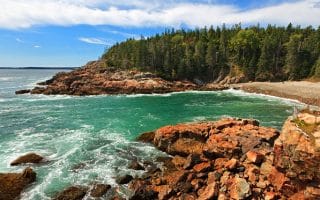
The Park Loop Road is great for running, especially the 5 mile section between Seal Beach and Little Hunters Beach. The Carriage Roads are special for running, with many options. And for a true challenge, run up Cadillac Mountain!
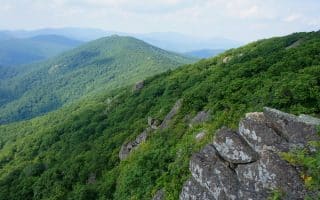
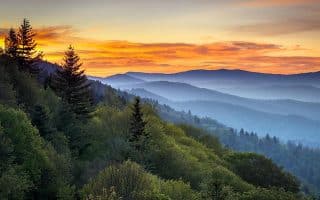
75 miles from Washington, D.C., featuring the famed 105 mile Skyline Drive. Wonderful drive touring and hiking opportunities. Good running options along some of the gentler trails and fire roads. Trail runners will find lots of options here too!
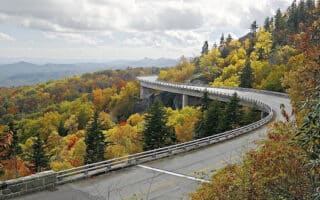
469-mile scenic road features stunning vistas, rugged mountains, and pastoral landscapes. With no shoulder, the Parkway and isn't great for running. We've researched the more runnable hiking trails and also recommend the carriage roads of Moses Cone Park.
America's most visited National Park. A great option for runners is the Cades Cove Loop Road, which runs 11 miles one-way. Also good running in the Greenbrier Cove area. Famous for wildflowers!
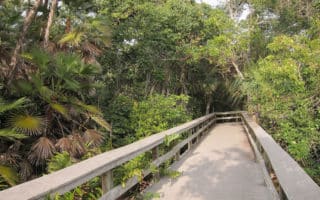
Huge park southwest of Miami with 1.5 million acres of wetland. Some of the best spots for running are the Shark Valley Bike Trail, Pinelands trails, the Old Ingraham Highway Trail and the Flamingo area trails.
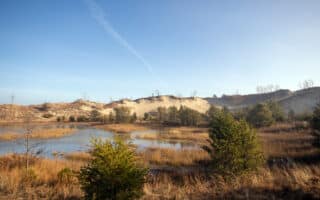
Located only an hour from Chicago, Indiana Dunes National Park is known for its spectacular dunes, wetlands, forests, and beaches. We've researched the best running options among the 50 miles of hiking trails and 37 miles of bike trails.
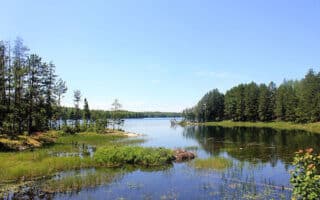
Water-based National Park with a series of interconnected waterways. Some scenic trails for running near the three Visitor Centers, featuring forests, marshes, wetlands, and lakes. Spectacular for running in winter, with trails and "ice roads"!
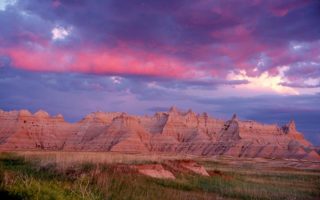
Dramatic landscapes spanning layered rock formations, steep canyons and towering spires. Best spots for running are along the Badlands Loop Scenic Highway, Sage Creek Rim Road, Castle Trail, and Sheep Mountain Table Rd.
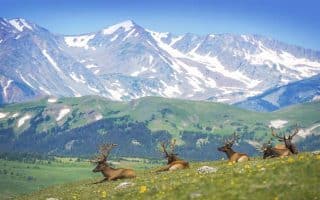
Wonderful park within 90 minutes of Denver. Majestic mountain views, mountain lakes, wooded forests, mountain tundra. Best running options are trails around Cub Lake, Lily Lake,Upper Beaver Meadow, and Emerald Lake.
Park in southwestern Colorado is a glimpse into communities that the Pueblo people built on the mesas and in the cliffs. 30 miles of hiking trails around mesas, and into rugged canyons. Best for running is the 5-mile Long House Loop.
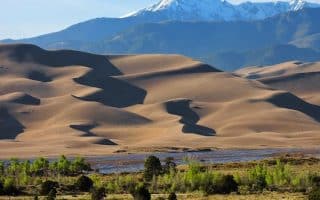
North America's tallest dunes, and terrain that also alpine peaks, forest, grasslands, and wetlands. Running the dunes is a singular experience but also very challenging. Best bet for running in the park are the miles of grasslands trails.
A remote and isolated park, featuring gorgeous mountains, desert, and 120 miles along the Rio Grande River. Best running spots are some of the gentler mountain trails, in the desert, along the river, and some of the park's scenic roads.
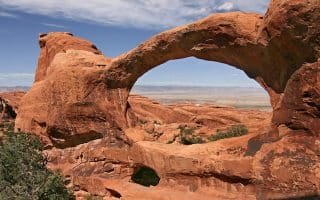
Along with Canyonlands NP, located in the outdoor recreational mecca around Moab, UT. For Arches, we recommend running the Landscape Arch, a nice 2-mile route starting at Devils Garden Trailhead. Arches Scenic Dr. is also runnable.
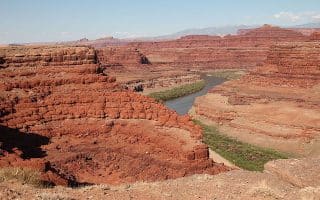
This area, near Moab, is a mecca for biking, hiking, climbing and other adventuring activities. Great running options in Canyonlands are Colorado River Overlook trail, Neck Springs, and a trail along Murphy Point Overlook.
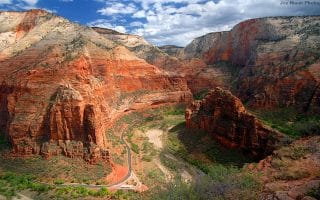
The two best options for running are the Pa’rus Trail, which is a 1.7 mile, flat path skirting the Virgin River in the flat, lower section of Zion Canyon, and the 6.2 miles Scenic Drive from the Visitor Center to Temple of Sinawava.
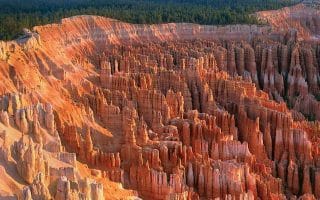
Bryce is marked by the salmon and orange-colored limestone that create a maze of spires, pinnacles and fins. Best running options are the new shared use bike path connecting Bryce and Red Canyon; and the 5.5 mile Rim Trail.
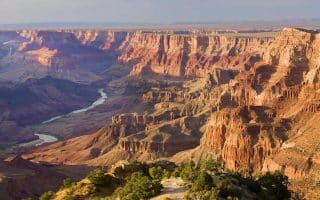
The best running options are in the South Rim section of massive Grand Canyon. Great running along the Rim Trail, the network of Greenways throughout the Village and surrounding communities, and the Arizona National Scenic Trail.
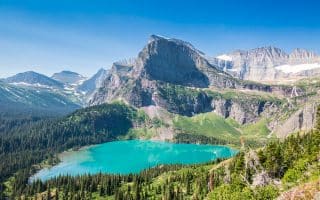
Pristine forests, alpine meadows, glacier-carved peaks, spectacular lakes, wildflowers! Fantastic trail running. We've included some gentler trail running options, plus some multi-use paths just outside the park in Kalispell & Hungry Horse.
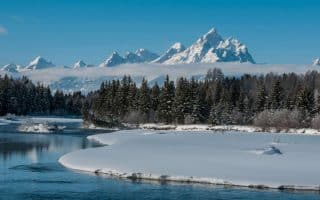
Showcasing the major peaks of the 40-mile-long Teton Range. Best for running in summer. Good options are the Grand Teton multi-use path, Taggart Lake Trail, and 6-mile loop around Two Ocean Lake.
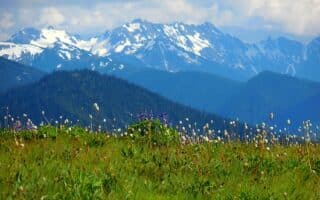
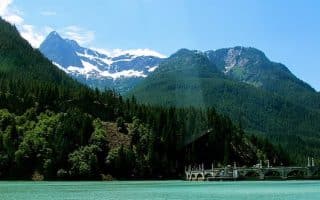
240,000 acre park, 2-hour drive from Seattle. Wonderful running opportunities, around valleys, waterfalls, subalpine meadows, old-growth forest and glaciers. Best routes are along some of the less traveled side roads and gentler hiking trails.
One of the closest national parks to a major metro area, the 1 million acre Olympic National Park has an incredible diversity of terrain, featuring snow-covered mountains, lush rain forests, and dramatic coastal terrain.
A stunning and diverse alpine landscape, less than three hours from Seattle. Generally it's more challenging trail running. Best running options are in Stekehin, accessed only by ferry. The MUST DO run is the first 6 miles of Stekehin Valley Road.
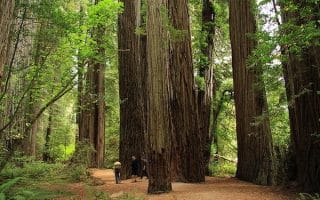
133,000-acre park located near the California-Oregon border features some of the tallest trees on earth, as well as vast prairies, oak woodlands, riverways, and 40 miles of rugged coastline. Our recommendations on the best trails, roads, and beaches for running.
The world’s first national park, showcasing colorful hot springs, mudpots, and geysers, in addition to its dramatic mountains, forests, lakes and wildlife. Several good running options -- read our caution note about wildlife. Video excerpt!
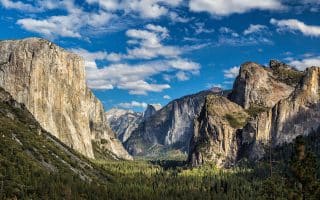
Waterfalls, deep valleys, grand meadows, ancient giant sequoias, a vast wilderness area in this 1,200 square mile park. Two good running options are the Yosemite Village Multi-Use Path, and Tuolumne Meadows.
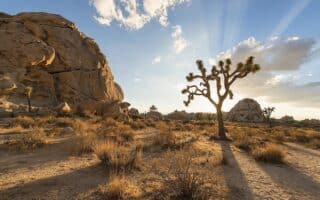
Not one of the better national parks for running, given the rugged, often sandy terrain, and summer heat. Best options are the backcountry roads, some of the easier hiking trails, and quiet residential streets in Yucca Valley & Desert Hot Springs.
Huge mountains, rugged foothills, deep canyons, vast caverns, and the world’s largest trees in these side-by-side parks. Recommended running: Roaring Rivers to Zumwalt Meadows Loop in Kings and Crescent Meadow Trail and Road.
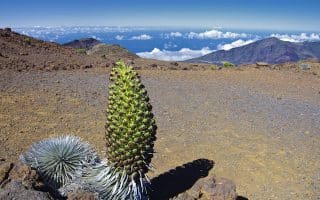
A one-of-a-kind run on a barren volcano, with incredible ocean views. Very challenging 10-mile run to the 10,000-foot summit is 3,000 foot gain. Or, have a partner drop you part way or go up for sunrise and run down.
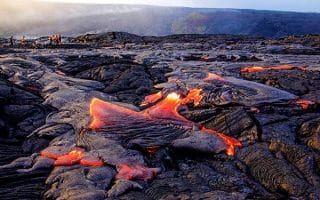
A one-of-a kind place. Hike or run the rim of an active crater, or run on trails or roads to enjoy terrain that includes deserts and rain forests, past craters and rift zones. We outline several good options. Note trail closures and air quality warnings!
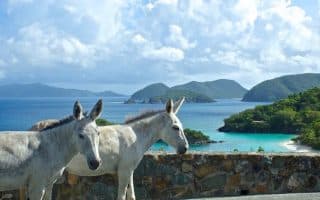
Virgin Islands National Park comprises 60% of the land mass of the St. John in the U.S. Virgin Islands. Numerous trails in the park are good for running, notably the Francis Bay Trail to Leinster Point, the Johnny Horn Trail, and Lind Point Trail.
Share your feedback on this route and see that of other Great Runs users. Click on the image icon to upload a photo. And please let us know if there are notes or changes we should incorporate!






Review or Comment on This Route/Share a Photo!
Share your feedback on this route and see that of other Great Runs users. Click on the image icon to upload a photo. And please let us know if there are notes or changes we should incorporate!