
The Right Cold Weather Gear For Running
by Published on: 15 September 2025
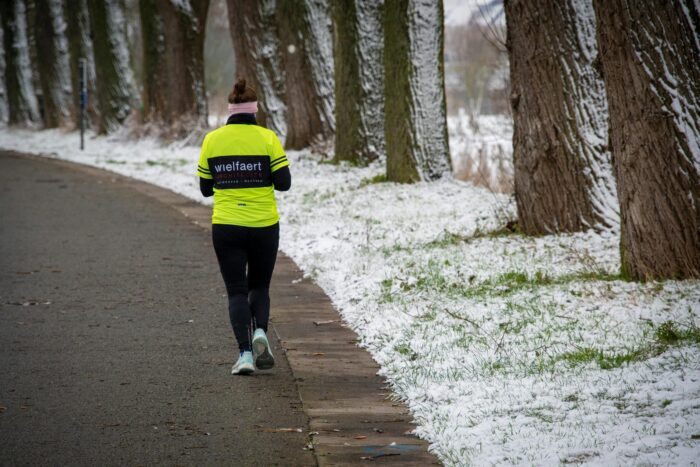
There’s an expression that runners use to describe how to prepare for running in cold weather: “there’s no such thing as bad weather…it’s only bad clothing choices”. Many runners actually embrace the cold. In part, because it is easier to adjust one’s gear for cold weather running compared to the opposite – running in hot weather!
There are three broad categories of decisions and related gear one must be prepared for cold weather running. The first is clothing, with the right type of apparel for gradations of temperature, and associated wind and precipitation. Second, is choosing the right gear for running if it’s icy or snowy. And third, to be possibly prepared for running in the dark, because colder temps generally mean shorter days.
One thing to consider is that you generally warm up after running for a few minutes. This is our way of saying don’t overdress!
Cold Weather Running Apparel: Layers
Our approach at Great Runs when thinking about running in the cold is to think about gradations of temperature. Runners need to think differently on a 20℉ day compared to a 40℉ day.
The first principle is to think about layers. If it’s below 50℉, it’s often helpful to have a base layer, which is worn next to the skin and wicks sweat away to keep you dry. Merino War or some other synthetic material is preferred for the base layer.
The mid-layer is more for insulation. Here, what you wear in terms of heaviness, depends on the temperature. Fleece is a popular material for this layer due to its lightweight warmth and good breathability, while merino wool is generally warmer. Then, adjust the thickness of the mid-layer depending on temperature. Generally, we think about 15℉ increments, counting down from 50℉.
An outer layer, such as a shell or water-resistant gear, is usually only used when it is windy, rainy, or snowy. A light wind jacket might suffice for a windy day. If it’s raining or snowing, a water-resistant shell or softshell jacket is recommended. Heavier, waterproof jackets might be needed on some days, but they aren’t breathable. Don’t stay in them if it’s cold after a run. Chills will set in!
For temperatures below 50℉, most runners need long pants, or leggings. For colder weather, there are gradations of thermal versions and thickness, depending on temperature. Polyester/spandex or merino blend is the recommended material.
Cold Weather Running: Accessories
Accessories for cold weather running depend on the temperature and other weather conditions. Remember that the body stays warmer if the head is warm. For temperatures between 30℉ and 50℉, a thermal headband – one that covers the ears – should suffice. If the temperature is below freezing, or if it’s raining or snowing, a hat or hood is the best option.
Gloves are the other thing to consider. All running stores in colder climes sell running gloves. The thickness and material is correlated with the temperature, and also one’s body type and metabolism.
Running Gear for When It’s Icy or Snowy
On the one hand, there’s a growing selection of good gear to help one run safely when it’s slippery. On the other hand, it’s also advisable to know when it might be a gym or treadmill day.
If it’s icy out (and be prepared for black ice on cold mornings!), there are two approaches. More involved and expensive are specialized running shoes that have traction such as spikes or screws that grip the ice. An easier and less expensive option is to buy grippers, such as Yaktrax, that slip over the shoes. Even here, there’s a gradation from lightweight grippers that use coils to more ‘crampon-y’ type accessories.
If it’s actually snowing out, you will need goggles. There aren’t really running-specific types of goggles: most ski goggles will generally be fine.
Running Gear for When It’s Dark
Colder days often mean shorter days, which might mean you’re running in the dark. If it’s dark out, you might consider a reflective vest that slips over whatever you’re wearing, or a brighter outer layer with reflectors. This is more about being seen than seeing.
If running in an area that is not well-lit, consider a headlamp. It will help you see (and avoid cracks, potholes, etc.), and also be seen. These headlamps are the same as used for hiking and camping. And remember, if it’s dark, always run opposite traffic!