
Off the Beaten Path Advice: The Importance of Experimentation
by Published on: 11 February 2026
“Pizza is Not in Fact, Pasta”
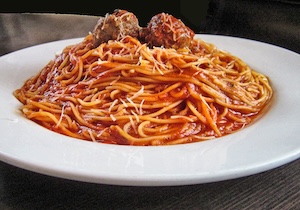 I am not about to tell you that going out with friends for pizza the night before a cross country race was a witting experiment. In fact, it wasn’t meant to be an experiment at all. I genuinely believed that I was doing my due diligence as a high school cross country runner by carbo-loading on a Friday night with friends before a big cross-country race that weekend. And before you chuckle to yourself (and maybe at me) and wryly ask “So how did that go?”, I’ll spare you the suspense. I don’t remember much about that weekend’s race, save for the fact that I vaguely remember the day of the race being hot and sunny and that I definitely remember not having a personal record that day. Now, it could’ve been because it was hot and sunny, but it also could’ve quite likely been because pizza (especially chain restaurant pizza) is not, in fact, pasta. Pasta (as you probably know) is like fuel for the muscles, and pizza… not so much. But given it’s been years since that evening and subsequent race and it’s a story I still remember and share to this day, it’s a story that does have value. And while I certainly would never advocate routinely learning things the hard way (some things in life really can’t be learned the hard way), I have found over the course of my running career that experiences (good or bad) are often excellent teachers.
But sometimes to gain experience you have to experiment. While I’m not thrilled that that particular cross-country race didn’t go well, there’s a real good chance that later in my running career carbo-loading with actual pasta did pay off in a race a day or two later. In fact learning how to carbo-load properly probably paid off for many of my races. That said, there was a second lesson here that I learned that was even more important than the first: As simple as it sounds, I learned that different things you do as a runner will have different effects on your running.
Now this might sound obvious, but in my experience as both a runner and as a store manager though, the idea that different things you do as a runner have different effects on your running is often not at all obvious to everyone who decides to take up running. In fact, it often surprises me how seldom people truly understand or appreciate this. To wit: Have you ever, in a group of understanding friends, questioning relatives, or cantankerous coworkers heard someone say “I can’t run because of my knees,” only to find out that they didn’t actually suffer some significant career-altering injury (which would certainly affect their knees), but instead once went on a two-mile run wearing basketball shoes on cold cement because it was gym class and their high school gym teacher made them, and, then surprise(!) that person had sore knees after? And you politely (hopefully politely) let them know that some sneakers are designed specifically for distance running? And that moreover, you’ve mentioned to them that the cold cement they ran on might just be one of the least knee-friendly surfaces on the planet? If you’re lucky, maybe they realized that their knee soreness might not be inevitable, and that if they tried different shoes and ran on a different surface their knees might not hurt as much. If you’re really lucky, they might have replied to your suggestion with a “How so?” or a “How are running shoes any different?,” or maybe even an “I didn’t know that.”
Which is all kind of the point: they didn’t know. They may have had one simple, bad experience with running, and that was enough for them to conclude that running wasn’t for them. You, as an experienced and knowledgeable runner, might realize that their bad experience was based on something simple like bad shoes or cold cement. But there was a time when you too didn’t know that proper running shoes made a difference. That the surface you were running on also made a difference. There was certainly a time I didn’t know. I spent my first cross country season suffering from shin splints because I didn’t know that some running shoes had more medial arch support than others. And for you too there was a time when you didn’t know that.
Next month I’m going to explore that all-important how people acquire running knowledge.