
How Many Steps in a Mile: Complete Guide for Walkers and Runners
by Published on: 12 September 2025

One of the most frequent search queries among runners is ‘how many steps are in a mile’. Well, like many things running, the answer isn’t simple. There are many factors affecting the number of steps in a mile. There will be variation from one person to the next, and there will also be differences depending on the activity being measured.
As a rule of thumb, there are about 2,000 to 2,500 steps in a mile for the average adult. This is generally for walking, which features a stride length of ~2-2.5 feet. Running stride length is typically ~3-4 feet, which translates to 1,500-2,000 steps per mile for the average runner.
Factors Affecting Step Count
There are several factors affecting stride length:
- Height. A taller person takes longer strides, so they will require fewer steps in a mile. For example, a 5’0” person averages 2,514 steps per mile for walking, while a 6’0” person uses 2,095 steps, according to Runstreet.
- Type of activity. Walking generally features a shorter stride, which is why walkers generally take about 25% more steps per mile than runners. Hiking, especially if going uphill, requires more steps, which means more steps per mile.
- Pace. This can also be a factor. The faster the pace, the longer the strides, which translates to fewer steps per mile.
- Type of Terrain. If the terrain is hilly, your steps will be shorter, which means that there will be more steps per mile.
How to Measure Steps Per Mile
The old-fashioned way of calculating your average steps per mile is pretty simple. Walk 20-30 steps and see what the distance is. Divide that total distance by the number of steps to get your average stride length.Then divide 5,280 (the number of feet in a mile) by your average stride length in feet.
Another way to do it is to go to a track or a place with an exact known distance. For example, a standard track is 400 meters (¼ mile). Walk around the track, measure your steps, and multiply by four. And for kicks, then try running, and see if there’s a difference in the number of steps (there should be).
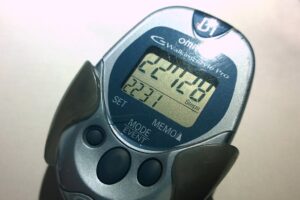
You can also use a pedometer or fitness tracker to measure steps per mile. That might provide a more accurate measure.
The Role of Wearable Devices and Apps
Most wearable devices such as Garmin Watch or Apple Watch can provide information on the number of steps per mile, since nearly all these devices show step count. Walk an exact distance, such as ¼ mile, to see the number of steps, and then extrapolate to 1 mile.
 The more accurate measurement will be on a GPS-equipped device, so you can walk an exact distance to see the number of steps. It’s also interesting to compare the step count over the same distance for walking and running.
The apps connected to these devices will also usually show stride length. For example, the Garmin Connect app, which is used for Garmin Watches, shows stride length under ‘stats’ for a particular activity. It uses your personal data like height to estimate stride length and calibrate its accelerometer for more accurate distance. This stride information is combined with distance information calculated by GPS to show steps per mile for outdoor activities, or stored stride information for indoor activities. Devices such as Fitbit, for non-GPS activities like walking, measure stride length by using factors such as height, gender, and type of activity.
It’s always fun to do some comparison measurement. Try walking or running a mile with a friend using the same type of device, such as an Apple Watch. Or, see if steps per mile is different for different devices. Note that it’s important to occasionally recalibrate steps a fitness device or wearable.
Good
Good It seems to be very helpful.