
Why the Major Marathon Courses Aren’t Always the Most Scenic
by Published on: 7 October 2025
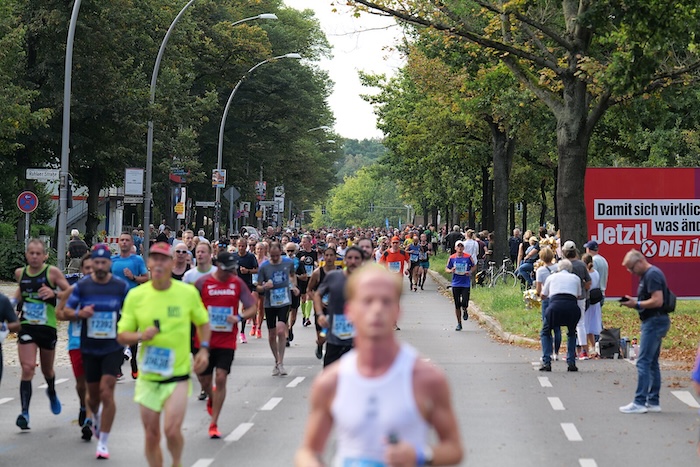
The Boston Marathon is, of course, iconic. But the Boston Marathon course isn’t along some of Boston’s best places to run, such as the Charles River Paths, Emerald Necklace, or waterfront. The same is true for the Chicago Marathon. The course passes through many of Chicago’s great neighborhoods and Grant Park, but not along the city’s iconic, 18-mile lakefront path.
In this piece, we talk about why some of the major Marathon courses aren’t always the most scenic, though there are upsides to those courses as well. We also give a short review of the seven World Marathon majors from the standpoint of how scenic they are.
Why Courses Aren’t Along Iconic Routes
The main reason the seven Abbott World Marathon Majors’ courses aren’t always along the most scenic routes is the size of the field. All of the World Majors – Boston, London, Berlin, Tokyo, Chicago, Sydney – have at least 10,000 runners, plus the large number of spectators, security, and so on.
This doesn’t mix well with some of their respective cities’ most scenic running routes. For example, the paths along the Charles River in Boston, or the Lakefront Trail in Chicago could not possibly accommodate those numbers of people. The other factor is that a marathon, of course, has to stretch for 26.2 miles, and most major races try to avoid duplicating course segments or ‘there and backs’.
But There is an Upside
Runners, especially if they’re traveling to a Marathon Major city to run the race, will want the course to pass by the city’s best scenery and major landmarks. So they might be disappointed.
But there is an upside! Because a Marathon Major is such a huge event, the course for all the Majors is closed to all vehicular and pedestrian traffic during the race. This means that courses can wind their way through great neighborhoods, and on some major streets that would not be accessible to runners on an average day. For example, in Chicago, runners get to run straight down Michigan Ave. (the ‘Magnificent mile).
A Review of the Seven Majors
Boston (third Monday in April). The iconic elements of this course are the one-way from Hopkinton and, the hills of Newton, and the finish in Back Bay. Arrive a few days early and taper along some of the city’s most scenic running spots, such as the Charles River, Emerald Necklace, & waterfront.

Chicago (second Sunday in October). The course runs near, but not along, the iconic Lakefront Trail. But it covers some 29 neighborhoods, with a spectacular finish along the Magnificent Mile, into Grant Park.
New York City (first Sunday in November). While you won’t run along the Hudson River or East River paths, you WILL get to experience all five NYC Boroughs, several bridges you wouldn’t normally be able to run across, and the unusual treat of running right down Fifth Avenue and then 3-4 miles in Central Park.
London (third or fourth Sunday in April). This one is an exception! Some 56,000 runners (starting from three separate locations) run past some of London’s most iconic sites, including many miles along the River Thames and a spectacular finish along The Mall to Buckingham Palace.
Berlin (last Sunday in September). This one does hit some of Berlin’s highlights, with the start and finish in the iconic Tiergarten, and a memorable finish passing through Brandenburg Gate.
Tokyo (first Sunday in March). The treat here is you get to run on Tokyo’s streets – something you would never be able to normally do in this hugely populous, dense city. The course is a nod to Tokyo’s past, present, and future, with the finish in the area of the Imperial Palace – whose loop is the iconic Tokyo run.
Sydney (last Sunday in August). It would be hard to design a marathon in Sydney that’s not scenic. While you might not get close to Sydney’s iconic beaches (where, admittedly, even the famed Bondi Beach walk is tough to run due to crowds), the point-to-point course showcases Sydney Harbour, a 4 km loop of Centennial Park, and an ability to experience 12 km of the Anzac Parade car-free, passing through Hyde Park and the Botanic Gardens, finishing at the Opera House.
Scenery is The Draw for Many Marathons!
There are somewhere between 2,500 and 4,000 full marathons that happen globally each year. Only a few hundred of these are of a size and complexity that they have to make compromises on the course’s scenery to accommodate the event.
In fact, for the vast majority of marathons, plotting the course along the host city/location’s most interesting and scenic spots is a top selling point for race organizers and a major draw for runners. The marketing of these events usually emphasizes the course’s beauty. And there are all sorts of great lists from marathon-oriented websites that highlight some of the most interesting and scenic marathon courses.
So don’t despair – there’s something out there for every marathon runner!