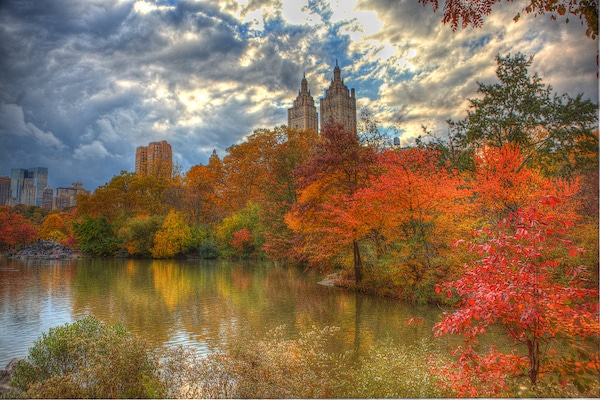
Central Park, located in the heart of Manhattan, is the must-do New York City run. The 853-acre, Olmsted-designed park dates back to 1858. It’s the most visited urban park in the United States, attracting 40+ million visitors annually. The park features a wonderful mix of terrain: open meadows, grand allées, some wooded sections, and an elevated reservoir which features great skyline views. Running in Central Park is always a festive scene — with a constant stream of pedestrians, joggers, and cyclists. It’s also a great people-watching spot. You might even see someone famous! Central Park is also the finish point of the famed NYC Marathon. PRO TIPS: Especially gorgeous in spring and autumn. The main perimeter path is lit at night. We don’t recommend running alone in the interior at night.
Central Park Runner Etiquette
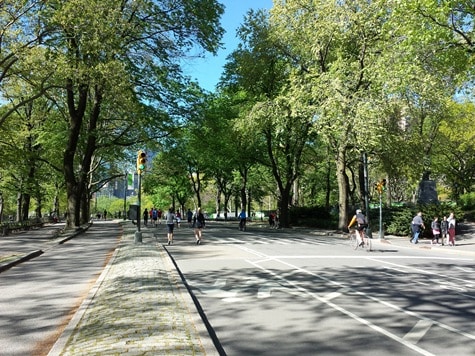
There is a huge number of other runners of all speeds along with tourists, dog-walkers, bikers, cars and horses. Thus, it is also useful to know Central Park runner etiquette. The innermost / left lane is for those running clockwise, the “middle” lane for those running counterclockwise and outside/right lane of the road is for cyclists, cars and horses. On pathways only for pedestrians, those running clockwise stay on the left side and counterclockwise on the far right side.
Where to Run in Central Park
There are two ‘iconic’ routes in Central Park: the ‘perimeter’ path, and a route incorporating the Reservoir. As the map shows, there are wonderful additional options — we recommend the Great Lawn and The Mall. Our routes generally start at the entrance to the Park in Columbus Circle, but clearly can be accessed from many spots. Note: If you’d like to have a guided running experience in Central Park, we highly recommend our affiliate partner Go! Running Tours.
Perimeter Path.This path is a pedestrian only path alongside the main road, around the perimeter of Central Park. It’s 6.2 miles and it includes some climbing. Run counterclockwise and you will encounter two major hills on your way; Cedar Hill (a.k.a. Cat Hill) and Harlem Hill. The South part of the park is the most crowded area, with the most crowds. Notable attractions include views of the Essex House, NY Athletic Club, Central Park Carousel, Sailboat Pond and Loeb Boathouse. One highlight, located at the entrance to Reservoir on East 90th Street, is a statue of the late founder of the NYC Marathon and New York Road Runners club.
Perimeter Path
There are multiple access points from both sides of the park. One good option is to start at Columbus Circle, located at the southwest corner of the park, where also USS Maine statue is located. Run down a short path of approximately 500ft to get to the main loop.
Reservoir Loop. One of the most popular places to run in Central Park, and indeed anywhere, is the well-maintained dirt path that circles around the Jacqueline Kennedy Onassis Reservoir. Locals know this “loop” as Bridle Path. It was originally built for horses but is mainly used by walkers and runners. Along with knee-friendly surface and car/bike-free pathway, it offers picturesque lakefront views with Manhattan skyscrapers in the horizon. There are markings labeling every 100 yards and the loop around is 1.6 miles. There are multiple access points from both sides of the park, the most direct being the Engineer’s Gate on East 90th Street. Run counterclockwise and stay on the right side of the pathway. If you want to have a bit longer “loop”, try the Full Bridle Path Loop, which is 2.5 miles and extends beyond the Reservoir, further north to the North Meadow fields and across the 102nd Street Transverse. It eventually rejoins the main Reservoir loop around West 93rd.
Central Park, located in the heart of Manhattan, is the must-do New York City run. The 853-acre, Olmsted-designed park dates back to 1858. It’s the most visited urban park in the United States, attracting 40+ million visitors annually. The park features a wonderful mix of terrain: open meadows, grand allées, some wooded sections, and an elevated reservoir which features great skyline views. Running in Central Park is always a festive scene — with a constant stream of pedestrians, joggers, and cyclists. It’s also a great people-watching spot. You might even see someone famous! Central Park is also the finish point of the famed NYC Marathon. PRO TIPS: Especially gorgeous in spring and autumn. The main perimeter path is lit at night. We don’t recommend running alone in the interior at night.
Central Park Runner Etiquette
There is a huge number of other runners of all speeds along with tourists, dog-walkers, bikers, cars and horses. Thus, it is also useful to know Central Park runner etiquette. The innermost / left lane is for those running clockwise, the “middle” lane for those running counterclockwise and outside/right lane of the road is for cyclists, cars and horses. On pathways only for pedestrians, those running clockwise stay on the left side and counterclockwise on the far right side.
Where to Run in Central Park
There are two ‘iconic’ routes in Central Park: the ‘perimeter’ path, and a route incorporating the Reservoir. As the map shows, there are wonderful additional options — we recommend the Great Lawn and The Mall. Our routes generally start at the entrance to the Park in Columbus Circle, but clearly can be accessed from many spots. Note: If you’d like to have a guided running experience in Central Park, we highly recommend our affiliate partner Go! Running Tours.
Perimeter Path.This path is a pedestrian only path alongside the main road, around the perimeter of Central Park. It’s 6.2 miles and it includes some climbing. Run counterclockwise and you will encounter two major hills on your way; Cedar Hill (a.k.a. Cat Hill) and Harlem Hill. The South part of the park is the most crowded area, with the most crowds. Notable attractions include views of the Essex House, NY Athletic Club, Central Park Carousel, Sailboat Pond and Loeb Boathouse. One highlight, located at the entrance to Reservoir on East 90th Street, is a statue of the late founder of the NYC Marathon and New York Road Runners club.
Perimeter Path
There are multiple access points from both sides of the park. One good option is to start at Columbus Circle, located at the southwest corner of the park, where also USS Maine statue is located. Run down a short path of approximately 500ft to get to the main loop.
Reservoir Loop. One of the most popular places to run in Central Park, and indeed anywhere, is the well-maintained dirt path that circles around the Jacqueline Kennedy Onassis Reservoir. Locals know this “loop” as Bridle Path. It was originally built for horses but is mainly used by walkers and runners. Along with knee-friendly surface and car/bike-free pathway, it offers picturesque lakefront views with Manhattan skyscrapers in the horizon. There are markings labeling every 100 yards and the loop around is 1.6 miles. There are multiple access points from both sides of the park, the most direct being the Engineer’s Gate on East 90th Street. Run counterclockwise and stay on the right side of the pathway. If you want to have a bit longer “loop”, try the Full Bridle Path Loop, which is 2.5 miles and extends beyond the Reservoir, further north to the North Meadow fields and across the 102nd Street Transverse. It eventually rejoins the main Reservoir loop around West 93rd.
Scroll Down For Route Maps
Essentials
Perimeter Path: 6.25 miles; Reservoir Loop: 1.6 miles, or 5.6 miles RT from Columbus Circle
Perimeter: 310 feet
Any access point but a good spot is Columbus Circle
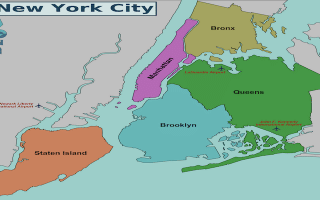
Our guide to the other New York City Boroughs: Brooklyn, Queens, the Bronx, and Staten Island. Nearly 20 additional routes featuring parks, waterside runs, and other major attractions. Most accessible via public transport.
One of the great runs anywhere, with paths, piers, & parks along the Hudson River on Manhattan's west side stretching for 12 miles from Lower Manhattan to the George Washington Bridge. Iconic views of the river, the New Jersey skyline, & Freedom Tower.
Part of Manhattan's extensive waterfront greenway system, this spectacular path runs along the East River between Battery Park & 125th St., with a ~1 mile gap around the U.N. Great water & skyline views. Can wrap around to West side @Battery Park.
Get up early to run the High Line! This popular 1.5 mile walkway elevated above the streets on Manhattan’s West Side features great views of the river & skyline, landscaping, and public art. Add on with Hudson River Greenway.
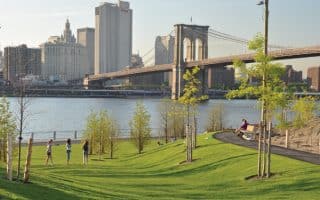
Incorporating one New York’s iconic bridges is an integral part of the running experience in New York City. Brooklyn Bridge is a ‘must do’. This nearly 4-mile run features the Brooklyn and Manhattan bridges.
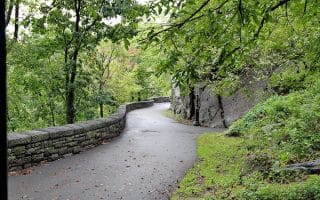
Great running alternatives at the northern end of the Hudson River Greenway: Fort Tyron Park's 8 miles of paths and killer stairs, and Inwood Hill Park's wooded trails. And it IS possible to run over the George Washington Bridge!
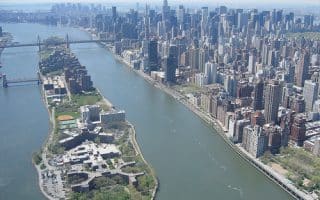
A fabulous run with water and skyline views. It’s about 4 miles around the perimeter, with parks on each end. To access the island by foot you have to cross the Queensboro Bridge. Or, access via tram or subway.
A great destination for running, accessed via Manhattan, the Bronx, & Queens. 10 miles of trails passing 330 acres of parkland and 60+ athletic fields. There are several marked running loops and a running track at Icahn Stadium.
A running treat via a 10-minute ferry from Manhattan or Brooklyn. This car-free island has several miles of trails. There are great skyline views from the 2.1 mile perimeter road, a fort, and fun hills in the interior.
Our guide to the other New York City Boroughs: Brooklyn, Queens, the Bronx, and Staten Island. Nearly 20 additional routes featuring parks, waterside runs, and other major attractions. Most accessible via public transport.
Share your feedback on this route and see that of other Great Runs users. Click on the image icon to upload a photo. And please let us know if there are notes or changes we should incorporate!
Subscribe
0 Comments
Oldest
Newest
Inline Feedbacks
View all comments
Essentials
Perimeter Path: 6.25 miles; Reservoir Loop: 1.6 miles, or 5.6 miles RT from Columbus Circle
Perimeter: 310 feet
Any access point but a good spot is Columbus Circle





Review or Comment on This Route/Share a Photo!
Share your feedback on this route and see that of other Great Runs users. Click on the image icon to upload a photo. And please let us know if there are notes or changes we should incorporate!